Sustainability is not anything new, with popular fast fashion brands now establishing a more conscious and sustainable approach like H&M, Zara, Urban Outfitters (Urban Renewal) and online website ASOS (Eco edit). There are also brands that are focused on sustainable and ethical fashion like the Reformation that is extremely transparent on the carbon footprint emission they have successfully saved and reports that could be emailed to you if you sign up for it.
So why is sustainability so important?
With cheap clothing, like really cheap (the price of a cropped top for the price of a Starbucks drink??? Even lesser if you go to Primark and it is honestly terrifying) and the fashion trends that comes and go in a blink of an eye, people tend to buy more clothes than they will ever need. This also means that more people are throwing away clothings they own when updating wardrobes becomes so convenient. These clothes ends up in the landfill and of course that is not a good thing at all. Most importantly, production of clothes would also conceivably increase, with the low prices of clothings you could never expect the labour costs to be anywhere near to a decent amount. Quality of the garments produced would definitely not be durable too, probably why people have to throw them away after a few wears. Not only fashion is losing ethicality, it is also hurting our dear planet earth. Just watch The True Cost and you will understand a little bit more why this is such a concerning matter.

This is worse than the scariest horror movie you can ever think of.

Anyone reading this blog post would probably already know that plastics are harder to decompose and the clothes these days consists of synthetic fibres which are super hard to decompose in landfills. The main reason synthetic fibres are used would probably be the lower cost and also the ways that we could manipulate it.
“Fashion shoppers spent about £3.5bn on Christmas party clothing this year – but 8 million of those sparkly items will be on their way to landfill after just one wear.” (Butler, 2018)
“The fashion industry has some truly major sustainability problems in its midst. By 2030, it is predicted that the industry’s water consumption will grow by 50 percent to 118 billion cubic meters (or 31.17 trillion gallons), its carbon footprint will increase to 2,791 million tons and the amount of waste it creates will hit 148 million tons.” (Sumner, 2019)
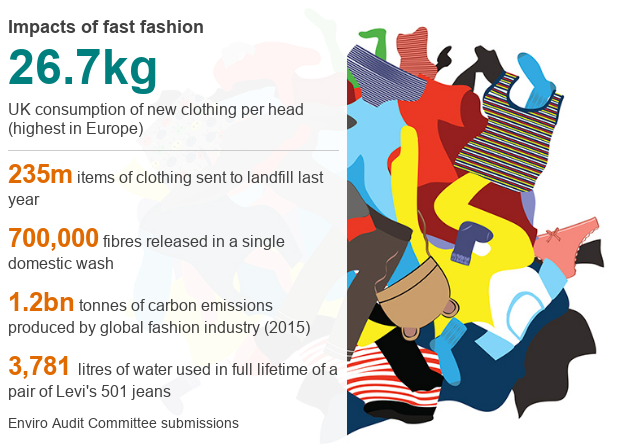
Now all the facts aside, the fashion industry is transforming in this era as we address sustainability issues. There are ways that we can take part in making sure that our garments designed are as sustainable as we can possibly make of.
As Designers:
- Cut down waste while making the garment
- Use more natural fibres or materials
- Create a more durable style
- Use dead stock fabrics or recycled textiles


As Consumers:
- Buy less clothes that you don’t need!!!
- Buy second hand – vintage shops, Depop, Ebay etc.
- Support sustainable brands (which could be pretty pricy)
- Recycle or sell or give away unwanted clothes but never dump it in the trash just like that
- Repair your clothes (I mean you can fix small holes easily! Google is your Best Friend)
As for my garment, I tried to cut on the edge of the fabrics that I am using to reduce the waste that would go into the bin. Also, I bought both natural (wool) yarn and also synthetic (arcylic/nylon mix) yarn which is much more expensive.. however, majority of the final outfit was made by the synthetic yarns just because it is cheaper to make. The outfit that I have created is really just showcasing my ideas but yet not 100% wearable for more than once therefore not as sustainable. However, I could take this as a lesson learnt to produce ideas that requires lesser materials to make and try to incorporate dead stock fabrics (if I can manage to find) or recycled wearable materials to create my looks.
References:
Boggon, C. (2019).How polluting is the fashion industry. Retrieved from Eko Energy: https://www.ekoenergy.org/how-polluting-is-the-fashion-industry/
Butler, S. (2018).Fast fashion giving way. Retrieved from The Guardian: https://www.theguardian.com/business/2018/dec/29/fast-fashion-giving-way-sustainable-wardrobe
Conversation, T. (2019). Can the fashion industry ever really be sustainable. Retrieved from The Fashion Law: http://www.thefashionlaw.com/home/can-the-fashion-industry-ever-really-be-sustainable
Harrabin, R. (2018). Fast fashion is harming the planet. Retrieved from BBC: https://www.bbc.co.uk/news/science-environment-45745242
Reiter, G. (2015).Closet sustainable conscious. Retrieved from Grechen Closet: http://grechenscloset.com/closet-sustainable-conscious/

 Corene Ang